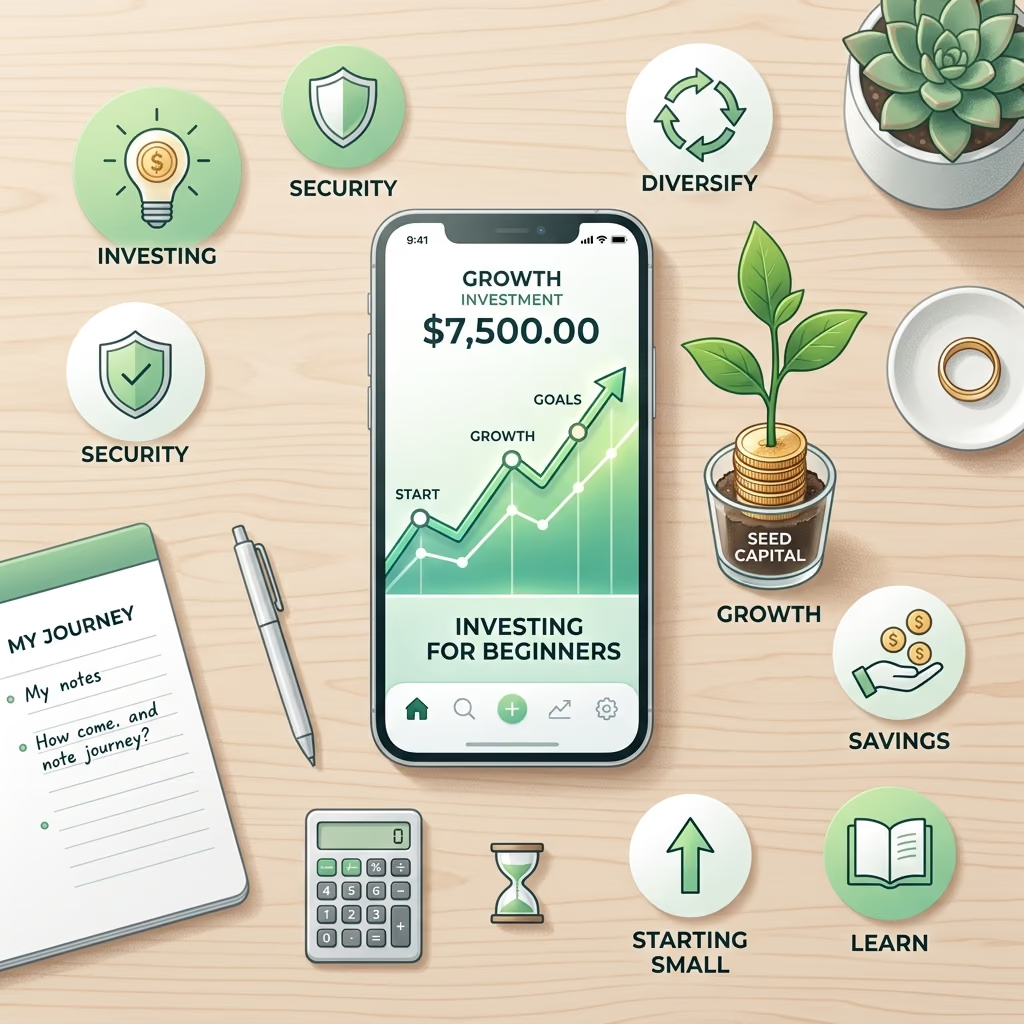
If you’ve been putting off investing because you think you need thousands of dollars, a finance degree, or a stockbroker on speed dial — you don’t. Today, you can start investing with as little as $5, from your phone, in about ten minutes. The bigger obstacle for most people isn’t money. It’s not knowing where to start.
This guide walks through the basics: what investing actually means, why it matters even on a modest income, and a simple path to get your first dollars working for you.
What Investing Actually Means
At its core, investing means putting your money into something with the expectation that it grows in value over time — instead of sitting in a checking account earning close to nothing.
When you invest in a company’s stock, you own a small slice of that company. When you invest in a bond, you’re essentially lending money to a company or government in exchange for interest. (For a deep dive, see our guide on stocks vs. bonds). When you invest in a fund (more on this below), you own a small slice of many companies at once.
The reason this matters more than saving alone: savings accounts protect your money, but they rarely grow it faster than inflation. Investing is how most people build wealth over decades, not by picking winning stocks, but by staying invested consistently over a long period.
Why Starting Early (Even Small) Matters More Than Starting Big
This is the single most important concept in investing, and it’s simpler than it sounds: compound growth. When your investments earn returns, those returns then earn their own returns. Over enough time, this snowballs.
Someone who invests $200/month starting at age 25 will typically end up with significantly more money by retirement than someone who invests $400/month starting at age 35 — even though the second person put in more money total. Time in the market matters more than the amount you start with.
(Try the compound interest calculator above to see how your own numbers play out over time.)
The Most Common Ways to Start Investing
You don’t need to pick individual stocks to invest well. In fact, most financial guidance for beginners points toward the opposite: broad, diversified funds rather than individual company bets.
Index Funds
An index fund is a single investment that holds many companies at once — often hundreds. Instead of betting on one company doing well, you’re betting on the overall market or economy growing over time, which historically it has, despite short-term ups and downs. Index funds are popular with beginners because they’re low-cost, diversified, and don’t require picking individual winners.
Robo-Advisors
A robo-advisor is an app or platform that builds and manages a diversified investment portfolio for you automatically, based on your goals and risk tolerance. You answer a few questions, deposit money, and the platform invests it for you — a good option if you want to invest but don’t want to manage the details yourself.
Retirement Accounts
Many countries and employers offer accounts specifically designed for retirement investing, often with tax advantages. These aren’t a separate type of investment — they’re a container that holds investments like index funds, and the tax benefits can meaningfully boost your long-term growth.
Individual Stocks
Buying shares of individual companies is the most well-known form of investing, but it’s also the riskiest for beginners, since your outcome depends entirely on how one company performs. Most financial guidance suggests starting with diversified funds before considering individual stocks, if at all.
How Much Should You Invest When You’re Starting Out?
There’s no universal number, but a common approach is to invest what’s left after covering essential expenses and building a small emergency cushion first (see our guide on building an emergency fund if you haven’t started one yet).
A few starting benchmarks people commonly use:
- Start with whatever feels sustainable, even $25–50/month — consistency matters more than the amount
- If your employer offers any kind of matching retirement contribution, contributing enough to get the full match is often treated as a priority, since it’s an immediate return on your money
- Increase your contribution gradually as your income grows, rather than waiting until you feel “ready”
Risk: What Beginners Should Understand Before Investing
Investing involves risk — the value of your investments can go down as well as up, especially in the short term. This is normal and expected, not a sign something has gone wrong.
A few principles that help manage this:
- Time horizon matters. Money you’ll need in the next 1–2 years generally shouldn’t be invested in the stock market, since there’s not enough time to recover from a downturn. Money you won’t touch for 10+ years has more room to ride out volatility.
- Diversification reduces risk. Spreading money across many companies (via an index fund, for example) reduces the impact of any single company performing poorly.
- Consistency smooths out timing risk. Investing a fixed amount on a regular schedule — rather than trying to time the market — is a common strategy known as dollar-cost averaging, which we cover in more detail in a separate guide.
Common Beginner Mistakes to Avoid
- Waiting for the “right time.” There’s rarely an obviously right time to start; consistency over time tends to matter more than timing any single entry point.
- Checking your portfolio daily. Short-term swings are normal and rarely meaningful — frequent checking often leads to emotional decisions.
- Investing money you’ll need soon. Keep short-term needs in savings, not invested.
- Ignoring fees. Some funds and platforms charge significantly more than others for similar exposure — it’s worth comparing costs before choosing where to invest.
Getting Started: A Simple First Step
If you’re feeling overwhelmed, here’s a reasonable starting sequence:
- Make sure you have at least a small emergency cushion set aside first
- Choose a low-cost, diversified index fund or a robo-advisor platform
- Start with an amount you can comfortably sustain each month, even if small
- Automate the contribution so it happens without requiring a decision each time
- Leave it alone and revisit your plan once or twice a year, not daily
Final Thought
Investing isn’t about picking the perfect stock or timing the market perfectly — for most people, it’s about starting early, staying consistent, and giving compound growth time to work. The amount you start with matters far less than simply starting.
This article is for informational purposes only and does not constitute financial advice. Consult a licensed financial advisor for guidance specific to your situation.