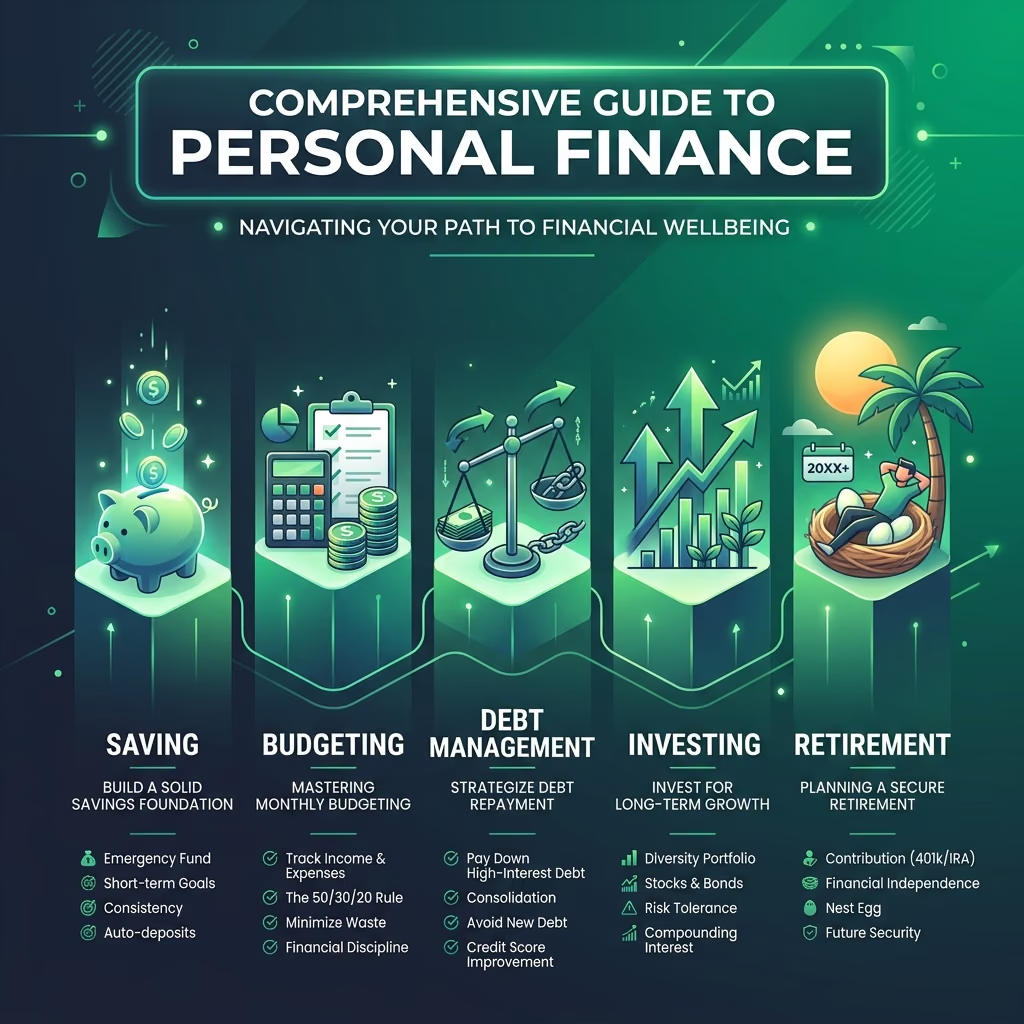
Personal finance is the practice of managing your money — earning it, spending it, saving it, protecting it, and growing it — in a way that supports both your day-to-day life and your long-term goals. It covers everything from how you budget your weekly grocery spend to how you plan for retirement decades away.
That’s the short definition. The more useful way to understand personal finance is as a set of interconnected skills, not a single topic — and most financial stress comes from only ever addressing one piece of it in isolation.
The core pillars of personal finance
Nearly everything under the “personal finance” umbrella fits into one of these categories.
1. Income
Everything starts here — how much you earn, from how many sources, and how reliably. This includes your salary or business income, but also side income, investment income, and benefits. Understanding your real take-home income, after taxes and deductions, is the starting point for every other pillar.
2. Spending and budgeting
Budgeting is simply deciding, on purpose, where your income goes instead of finding out after the fact. This is usually where people start their personal finance journey, because it’s the most immediately actionable — our step-by-step guide to creating a budget walks through building one from scratch, including how to choose between methods like the 50/30/20 rule and zero-based budgeting.
3. Saving
Saving covers both your emergency fund — typically 3–6 months of essential expenses, kept somewhere accessible — and shorter-term goals like a vacation, a car, or a down payment. The emergency fund specifically exists to keep a single unexpected expense from turning into new debt.
4. Debt management
Not all debt is equal. A mortgage or a low-rate student loan behaves very differently than high-interest credit card debt. Managing this pillar well means understanding the true cost of what you owe — which starts with understanding how your credit score is calculated and how credit utilization affects it, since both directly influence the interest rates you’ll be offered on any future debt.
5. Investing
Investing is how money grows faster than it can through saving alone, using the combination of market returns and compounding over time. (If you’re just starting out, explore our detailed guide on investing for beginners). This includes retirement accounts (like a 401(k) or IRA), brokerage accounts, and — for many people — their home. The core tradeoff to understand here is risk versus time horizon: money you need in two years and money you won’t touch for twenty should generally be invested very differently.
6. Insurance and protection
This is the pillar people think about least until they need it most. Health insurance, auto insurance, renters or homeowners insurance, disability insurance — this category exists to make sure a single bad event (an accident, an illness, a house fire) doesn’t undo years of progress on every other pillar.
7. Retirement and long-term planning
Retirement planning is really just very long-term saving and investing, made distinct because of the tax rules involved (401(k)s, IRAs, Roth accounts) and the sheer length of the time horizon. The earlier this pillar gets attention, the less total money it takes to reach the same outcome, thanks to compounding.
8. Taxes
Taxes touch every other pillar — your income is taxed, many investment accounts are tax-advantaged, and some debt (like mortgage interest, in certain cases) can affect your tax picture. You don’t need to become a tax expert, but understanding the basics of how your income is taxed changes how you evaluate almost every other financial decision.
Why personal finance matters more than it seems
None of these pillars operate independently. Someone with a great income but no budget can still live paycheck to paycheck. Someone who saves diligently but carries high-interest debt is often losing more to interest than they’re gaining in savings interest. Someone who invests well but has no insurance is one bad event away from starting over.
Personal finance, done well, isn’t about excelling at any single pillar — it’s about making sure no single pillar is quietly undermining the others.
Common personal finance mistakes
- Treating savings as “whatever’s left over” instead of a fixed, automatic line item
- Focusing on investing before building an emergency fund, which often forces people to sell investments at a bad time when an unexpected expense hits
- Ignoring credit score mechanics until applying for a mortgage or auto loan, when it’s too late to fix quickly
- Carrying high-interest debt while also earning low-interest savings, without realizing the math is working against them (see good debt vs bad debt)
- Waiting for “enough money” to start, when small, consistent habits started early usually outperform larger efforts started late
A simple starting roadmap
If you’re beginning from scratch, a reasonable order of operations looks like:
- Build a starter emergency fund — even $500–$1,000 — before aggressively tackling anything else
- Create a basic budget so you know your real numbers, not estimated ones
- Pay down high-interest debt (generally anything above 7-8% APR) aggressively, using strategies like the avalanche method, since guaranteed “returns” from avoiding that interest usually beat market returns
- Capture any employer retirement match — it’s an immediate, guaranteed return that’s rare to find anywhere else
- Expand your emergency fund to a full 3–6 months of expenses
- Increase retirement and investment contributions once the above are in place
- Review insurance coverage to make sure a single bad event can’t undo the rest
This order isn’t a strict rule — someone with high-interest debt and no employer match might reasonably prioritize differently — but it’s a solid default for most people starting out.
FAQ
What is the simplest definition of personal finance? Personal finance is how an individual or household manages money — earning, spending, saving, protecting, and growing it — to meet both immediate needs and long-term goals.
What are the 5 basics of personal finance? Most frameworks converge on: income, spending/budgeting, saving, debt management, and investing, with insurance and tax planning often added as supporting pillars.
Why is personal finance important? Because financial decisions compound over time, both positively (consistent saving and investing) and negatively (high-interest debt, no emergency fund). Small, informed habits early on tend to matter more than large corrective efforts made later.
What’s the difference between personal finance and financial literacy? Financial literacy is the knowledge and understanding of financial concepts — what compound interest is, how credit works. Personal finance is the actual practice of applying that knowledge to your own money and decisions.
Where should someone start if they feel overwhelmed? Pick one pillar — usually budgeting, since it clarifies everything else — and get that working before layering in the rest. Trying to fix every pillar simultaneously is a common reason people abandon the effort entirely.
This article is for general educational purposes and isn’t personalized financial advice. Individual circumstances vary — consider consulting a financial professional for guidance specific to your situation.
Read next
- How to Create a Budget: A Step-by-Step Guide for Beginners — a practical guide to building your first budget
- What Is an Emergency Fund and How Much Do You Really Need? — how to build a safety net to protect your finances
- Investing for Beginners: How to Start With Any Budget — how to start growing your money for the long term