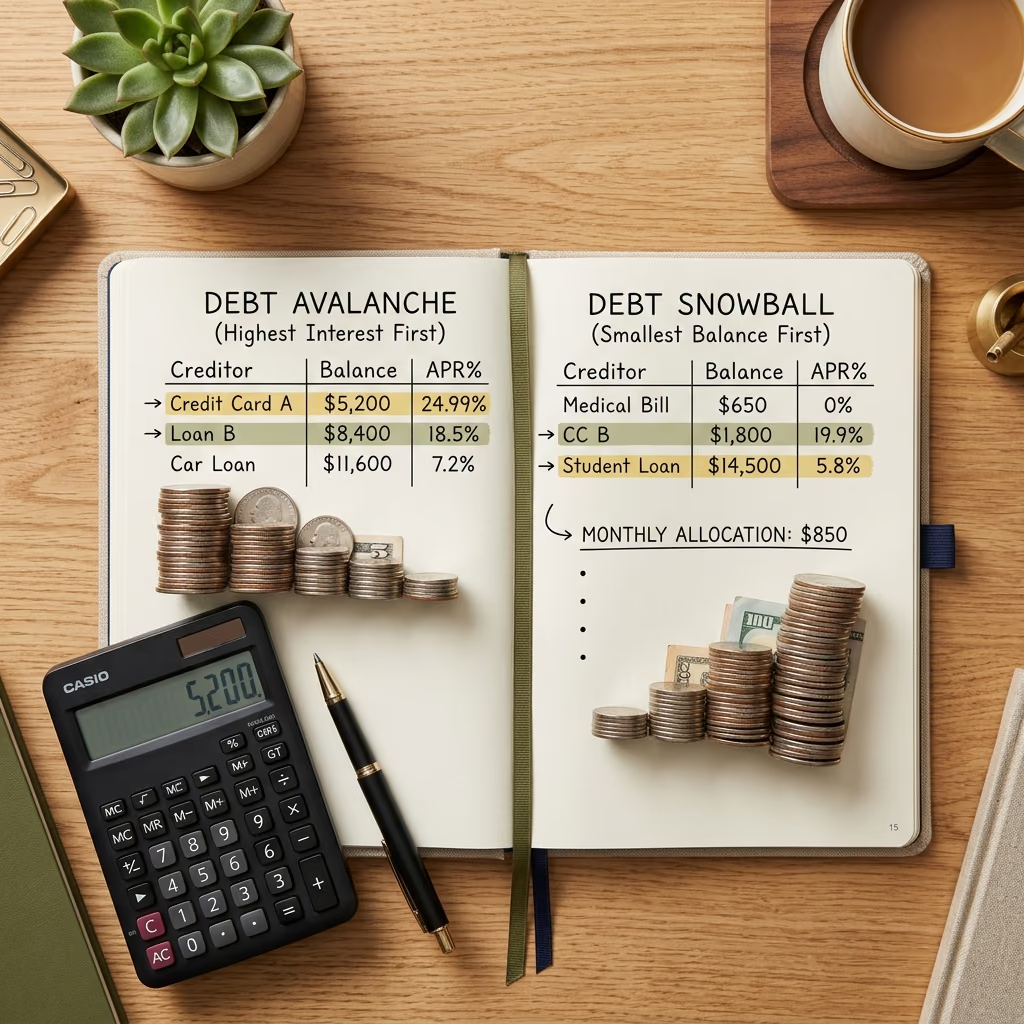
If you have more than one debt to pay off, there are two well-known strategies for deciding which one to attack first — and they’re built on opposite philosophies. One optimizes for the math. The other optimizes for you actually sticking with it. Both work. Which one works for you depends less on your debt and more on your behavior.
The debt avalanche method
The rule: pay the minimum on every debt, then throw every extra dollar at the debt with the highest interest rate, regardless of balance size. Once that one’s paid off, roll its entire payment into the next-highest-rate debt, and repeat.
This is the mathematically optimal approach. Because you eliminate your most expensive debt first, you pay the least total interest over the life of your payoff plan, every time, without exception.
The debt snowball method
The rule: pay the minimum on every debt, then throw every extra dollar at the debt with the smallest balance, regardless of its interest rate. Once that one’s gone, roll its payment into the next-smallest balance.
This method, popularized by financial personality Dave Ramsey, costs more in total interest than the avalanche method in almost every case — but it’s built around a different goal: generating quick wins that keep you motivated through a long payoff process.
The math, side by side
Say you have three debts:
| Debt | Balance | Interest Rate | Minimum Payment |
|---|---|---|---|
| Credit Card A | $1,200 | 24% | $35 |
| Personal Loan | $6,000 | 12% | $150 |
| Credit Card B | $3,500 | 19% | $90 |
With an extra $300/month available beyond the minimums:
Avalanche order: Credit Card A (24%) → Credit Card B (19%) → Personal Loan (12%)
Snowball order: Credit Card A ($1,200) → Credit Card B ($3,500) → Personal Loan ($6,000)
In this particular example, both methods actually start with the same debt — Credit Card A happens to have both the highest rate and the smallest balance, which isn’t unusual with high-interest credit cards. The methods typically diverge more once the smallest-balance debt and the highest-rate debt are different accounts. In cases where they do diverge, the avalanche method generally saves anywhere from a modest amount to several hundred dollars in total interest, depending on how large the rate and balance differences are — the bigger the gap between your highest-rate and smallest-balance debts, the more the avalanche method saves.
Why the “worse” math option is still a legitimate choice
Paying off debt is as much a behavioral challenge as a mathematical one. The snowball method’s entire value proposition is psychological: eliminating a full debt — any debt — produces a real sense of progress that a slowly-shrinking high-interest balance doesn’t provide in the early months.
For someone who has started and abandoned a debt payoff plan before, that early motivation can be the difference between finishing the plan and quitting in month four. Paying a bit more in total interest is a reasonable tradeoff if it means the plan actually gets completed instead of abandoned halfway through.
A hybrid approach
You don’t have to pick one philosophy and follow it rigidly. A common middle ground: knock out one or two very small debts first for quick momentum — even if they’re not your highest-rate accounts — then switch to attacking the highest interest rate for the remainder of the payoff plan. This captures some of the snowball’s early motivation without sacrificing much of the avalanche’s interest savings over the full timeline.
How to decide which fits you
- Choose avalanche if: you’re motivated by numbers and progress you can calculate, you have the discipline to stay consistent without early “wins,” or the interest rate differences between your debts are large enough that the savings are meaningful.
- Choose snowball if: you’ve tried and abandoned debt payoff plans before, you’re motivated more by visible milestones than by optimized math, or your debts are similar enough in interest rate that the avalanche method’s savings would be small anyway.
- Choose a hybrid if: you want some early momentum but still want to prioritize interest savings for the bulk of the plan.
How to actually set either one up
- List every debt with its balance, interest rate, and minimum payment
- Confirm your extra monthly amount available beyond all minimums combined
- Order your debts according to whichever method you’picked
- Keep paying minimums on everything else — never skip a minimum payment to add extra to your target debt; missed minimums damage your credit and can trigger penalty rates
- Roll the full payment forward the moment a debt is paid off — this “snowballing” of your payment amount is what makes both methods accelerate over time
- Recheck the order periodically, especially after paying off an account, in case a promotional rate expired or a balance changed enough to change the priority
A note on high-interest debt specifically
Regardless of which method you choose, any debt above roughly 15-20% APR (most credit cards) deserves aggressive attention before comparatively low-rate debt like a mortgage or federal student loan. The “avalanche vs. snowball” decision matters most when you have several debts in a similar range — it matters far less when one debt is dramatically more expensive than the rest, since nearly any reasonable strategy will prioritize that one early regardless of method.
FAQ
Which method is objectively better?
Avalanche minimizes total interest paid, mathematically, every time. Snowball is “better” only in the sense that a plan you actually complete beats a theoretically optimal plan you abandon.
Can I switch methods partway through?
Yes — there’s no penalty for switching strategies partway through a payoff plan. Some people start with snowball for early motivation and switch to avalanche once the habit is established.
Should I keep making minimum payments on debts I’m not focusing on?
Always. Both methods depend on never missing minimum payments on your other debts — skipping one to accelerate a different debt can trigger late fees, credit score damage, or penalty interest rates that erase any savings you were trying to achieve.
Does either method work with debt consolidation?
Consolidating high-interest debts into a single lower-rate loan can be a useful separate strategy, but it doesn’t replace the need to decide how you’ll prioritize whatever debts remain afterward.
This article is for general educational purposes and isn’t personalized financial advice. Individual circumstances vary — consider consulting a financial professional for guidance specific to your situation.